

Public policy shapes nearly every aspect of our daily lives—often in ways we do not immediately notice. From transportation and housing to education and public safety, policy decisions influence how communities function and how governments serve the public. Understanding these policies requires more than simply reading legislation or regulations; it requires thoughtful analysis.
Policy analysis allows us to examine how a policy was developed, what goals it was intended to achieve, and whether it ultimately delivers the results it promised. By looking closely at real-world cases, we can better understand the complex relationships between political decisions, administrative processes, and public outcomes.
One of the most effective ways to study policy is through a case study approach. By focusing on specific examples, we can explore how policies are implemented, how institutions respond, and how communities are affected. Case studies provide valuable lessons about what works, what does not, and why.
This blog is dedicated to exploring public policy through this lens. Drawing on experience in academia and the public sector, I approach policy analysis with both an insider’s understanding of government processes and an outsider’s freedom to question assumptions. My goal is not only to analyze policy decisions but also to encourage thoughtful discussion about the systems that shape public life.
In a time when policy debates are often reduced to headlines and sound bites, careful analysis remains essential. By examining policy closely and critically, we can better understand the challenges governments face and the opportunities for improving how policy serves the public.
Why Bakersfield Must Treat Its Urban Tree Canopy as Public Health Infrastructure
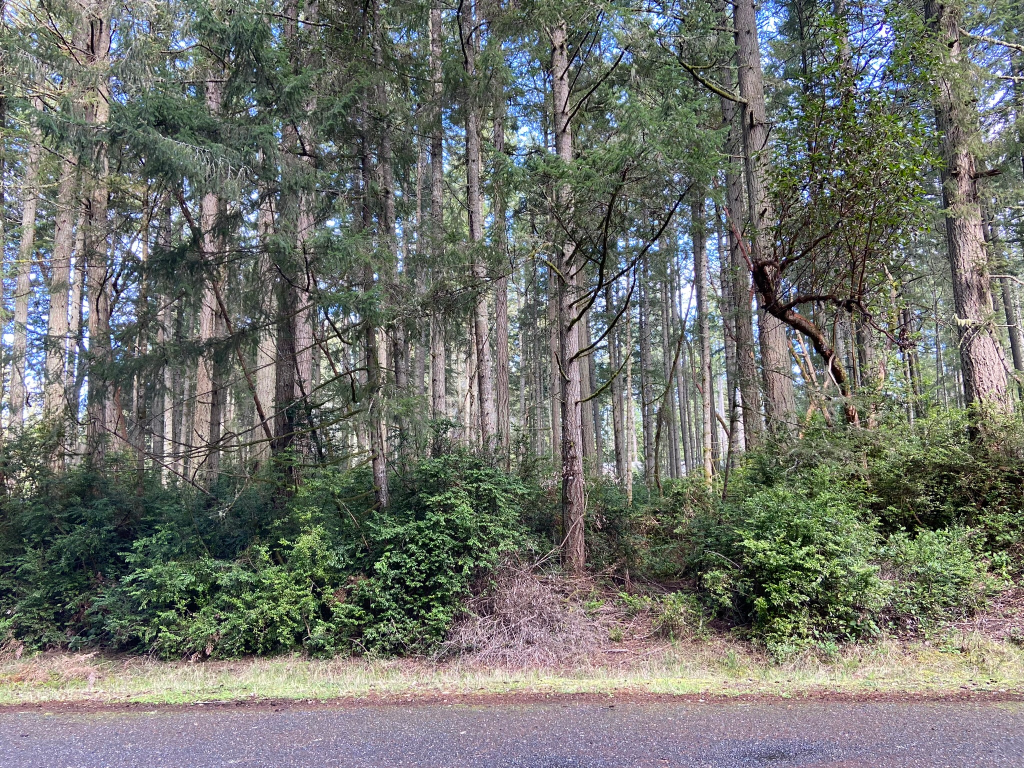
I had an a-ha moment when I first learned of Shinrin-Yoku. Before, I couldn’t really say why I loved the forests in Washington (I’m not going to add State because I didn’t add D.C.). I especially love the forested island where I bought a large parcel of land—I own some of that Anderson Island forest. Why, as I near full retirement, am I planning to build a cabin in the woods? Shinrin-Yoku.
Shinrin-Yoku, translated from Japanese to English, is a forest bath. The philosophy is underpinned by Buddhist and Shinto reverence for nature and her healing powers. Mindful and deliberate time spent in a forest may restore mental, emotional, and some say physical well-being. Unlike the physical exertion and speed of hiking, mountain biking, running, and skiing, Shinrin-Yoku is bathing in the atmosphere of the forest, engaging the five senses in a slow deliberate soaking; a form of therapy made famous by Dr. Qing Li, the Chairman of the Japanese Society of Forest Medicine [1,2].
In an informative and eloquent book [3], Dr. Qing Li, an immunologist by profession, lays out the benefits of forest bathing, which includes lower cortisol levels and blood pressure (reduced stress), increased feelings of calm and happiness (improved mood), enhanced immune function through exposure to phytoncides (natural oils released by trees), and time in nature helps clear mental clutter (enhanced creativity and focus). Dr. Li’s research was primarily focused on the dense forests of Japan, so I crosswalked his research to dense forests in Washington and concluded that Shinrin-Yoku is why I want to build a cabin in the woods. But all that explains where I’m going, not my current situation.
This brings me to Bakersfield, California. I’ve lived here for 35 years, no, that’s not right. I’ve been held captive by my wife for 35 years, who wants to stay close to her family. As you can probably tell, I’m not happy living here. My unhappiness is tied to the built environment. The lack of tree canopy makes Bakersfield a miserable place. Although Bakersfield is in the semi-arid climate zone (hot, dry summers; cool, mild winters; very low annual rainfall; and long periods without rain), much can be done to increase the tree canopy and improve our built environment. It just takes changing how trees are considered by the local government: Are trees a landscaping amenity, or are they vital to health and well-being? Research is replete with support for the latter.
Bakersfield’s built environment and climate zone exacerbate high summer temperatures through the heat-island effect. The heat island effect refers to the tendency of cities, dense with asphalt, buildings, and limited vegetation, to absorb, retain, and re‑emit heat, resulting in higher temperatures than surrounding rural areas. These temperature differences typically range from 1–7°F warmer during the day and 2–5°F warmer at night, depending on humidity, population density, and land‑surface characteristics [4]. Urban sprawl in Bakersfield increased roads, paved parking areas, buildings and houses, and decreased vegetation and natural surfaces. It’s only going to get hotter! Investing in a movement to increase the tree canopy in Bakersfield would mitigate some of the heat island effects (yes, it’s got to be a movement by the people; the city government doesn’t seem interested). Increasing the tree canopy to mitigate heat islands also improves air quality, carbon capture, and water retention.
Kern County ranks among the worst counties in California for ozone and particle pollution [5], and the Bakersfield–Delano metro area is the most polluted in the United States for year‑round particle pollution [6].
Kern County experiences significantly higher asthma burdens than the California average, with emergency‑department visit rates 20–25% above statewide levels and elevated hospitalization and prevalence rates [7]. At the city level, Bakersfield ranks among the most challenging places to live in the United States for people with asthma [8]. A note about asthma: tree pollen is a trigger for some asthmatics, while high particle pollution affects all asthmatics.
Decades of research show that expanding the urban tree canopy improves public health, reduces extreme heat, cleans the air, enhances water retention, and lowers energy costs [9]. The overwhelming evidence supporting the expansion of the urban tree canopy has not gone unnoticed. The National League of Cities advocates for increasing the urban tree canopy (Nature Everywhere Communities) and reducing impervious surfaces (Smart Surface Coalition); a one-two punch to provide more shade and retain stormwater runoff [10]. The state of California recognized the overwhelming body of research supporting the expansion of the urban tree canopy and passed AB 2251 [11], which led to CAL FIRE’s Urban & Community Forestry Program. The strategic plan, through the lens of fire protection and forestry, is leading statewide efforts to expand and manage the urban tree canopy. It explicitly supports urban canopy expansion, climate resilience, and the public health benefits of improving our built environment [12].
I reviewed the League of California Cities website, wondering whether national advocacy had trickled down to California, but I didn’t find anything indicating that increasing the urban tree canopy was a priority. In 2024, the City of Bakersfield considered the benefits of increasing urban tree canopy and hired a consultant to study our built environment and develop a tree plan [13]. However, of late, it is clear that the city’s orientation toward trees is confined to a single department that views them as a park amenity rather than as essential to public health [14].
I ask you, the reader, the thinker, the highly motivated advocate, what are we to do in Bakersfield to increase our tree canopy, especially in low-income areas that need it the most? Perhaps I can point you to a policy brief that outlines steps for city council members and city staff to increase the tree canopy in Bakersfield. Or perhaps I could link you to a growing local coalition that has taken on the challenge. Lastly, we could point to our other problem in Bakersfield (lack of water) and decide that planting more water-hungry trees isn’t sustainable, and do nothing. I will address our water issues in a separate blog post. Until then, read the policy brief, contact me if you want to be connected to the local collaboration, and read anything Louis Henry writes about water (she’s the best!)[15].
References
1. Plevin, J. (2018). From Haiku to Shinrin-Yoke: A brief history of forest bathing. Forest History Today, Spring/Fall. https://foresthistory.org/wp-content/uploads/2019/06/3-Plevin_Forest_Bathing.pdf
2. Tetsu, M.. (2024, March 3). The call of the wild: Forest bathing and urban greening. TJJ Online. https://www.japanjournal.jp/science/environment/pt20240327368.html
3. Li, Q. (2018). Forest bathing: How trees can help you find health and happiness. Penguin Life. ISBN: 978-0-525-55985-6
4. United States, Environmental Protection Agency. (2025). What are heat islands.
5. American Lung Association. (2026). State of the air: California, Kern. https://www.lung.org/research/sota/city-rankings/states/california/kern
6. Smart Air. (2025). Top 10 worst air quality cities in the United States (2025 AQI rankings).
7. California Department of Public Health (n.d.). Kern County asthma profile. https://www.cdph.ca.gov/Programs/CCDPHP/DEODC/EHIB/CPE/CDPH%20Document%20Library/County%20profiles/Kern2016profile.pdf
8. Asthma & Allergy Foundation of America. (2025). 2025 asthma capitals: The most challenging places to live with asthma. https://aafa.org/wp-content/uploads/2025/09/aafa-2025-asthma-capitals-report.pdf
9. Ulmer, J.M., Wolf, K.L., Backman, D.R., Tretheway, R.L., Blain, C.J., O’Neil-Dunne, J.P., & Frank, L.D. (2016). Multiple health benefits of urban tree canopy: The mounting evidence for a green prescription. Health & Place, 42, 54-62. https://www.fs.usda.gov/pnw/pubs/journals/pnw_2016_ulmer001.pdf
10. National League of Cities. (2026). Leveraging urban tree canopies to unlock community resilience. https://www.nlc.org/article/2025/04/25/leveraging-urban-tree-canopies-to-unlock-community-resilience/
11. California Legislature. (2022). Assembly Bill 2251: Urban forestry: Statewide strategic plan (Chapter 186, Statutes of 2022). https://leginfo.legislature.ca.gov/faces/billNavClient.xhtml?bill_id=202120220AB2251
12. State of California. (2026). Urban and Community Forestry. https://www.fire.ca.gov/what-we-do/natural-resource-management/urban-and-community-forestry
13. City of Bakersfield. (n.d.). Central city & citywide tree plan (November 2024). https://content.civicplus.com/api/assets/ca-bakersfield/940ad1fd-4435-4a52-aaaa-58b118de4acc?cache=1800
14. Duval, H. (2026, March 13). Bakersfield officials debate tree canopy expansion. Kern Col News. https://southkernsol.org/2026/03/13/bakersfield-officials-debate-tree-canopy-expansion/
15. SJV Water. (2026). San Joaquin Valley Water. https://sjvwater.org/
